Straw power!
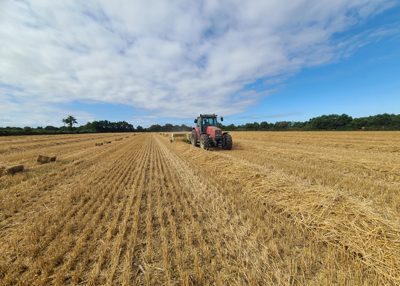
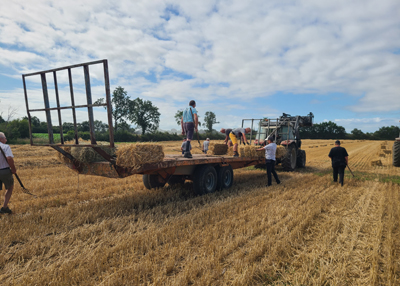
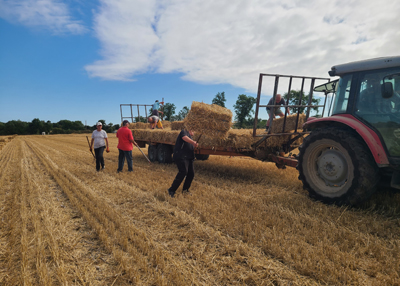
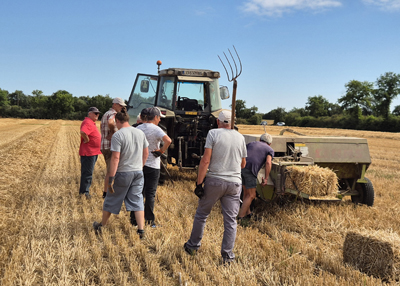
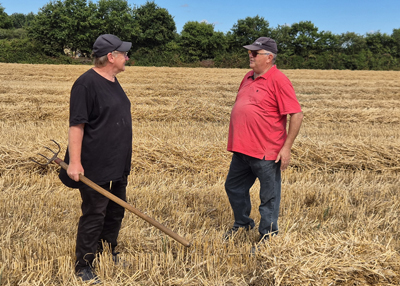
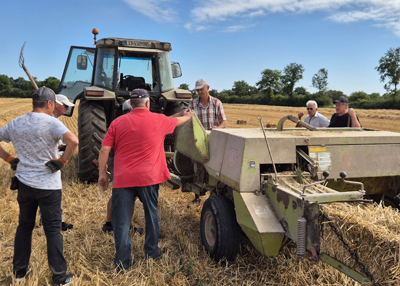
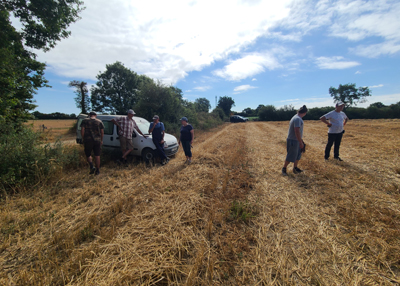
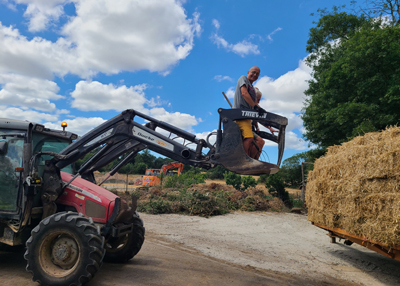
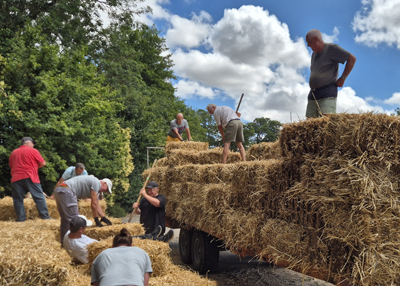
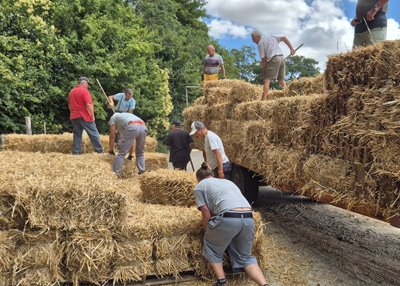
As every year, the call of the straw echoed across Laurent and Catherine's field. And as every year, the members of Compostons Ensemble answered the call: up to 16 brave volunteers swapped their deckchairs for pitchforks. This year, the heatwave set the tempo: the wheat was cut much earlier than usual. The weather decides, we adapt — that's composting life for you.
A star born in 1975 (with a temperament to match)
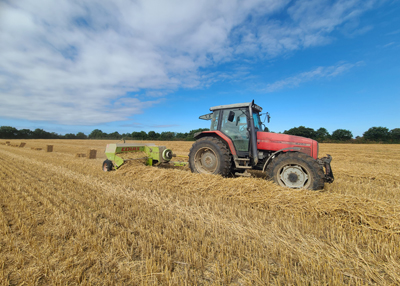
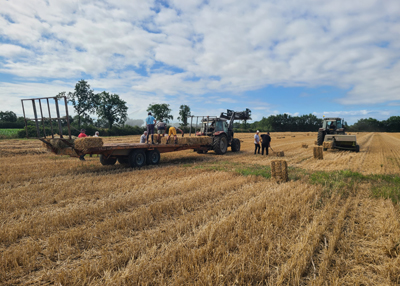
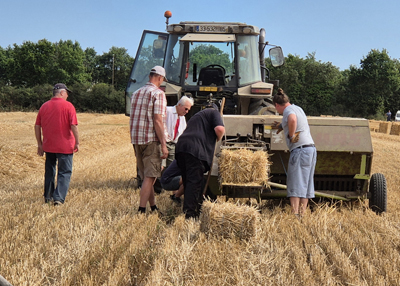
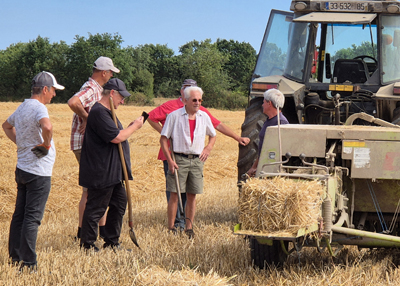
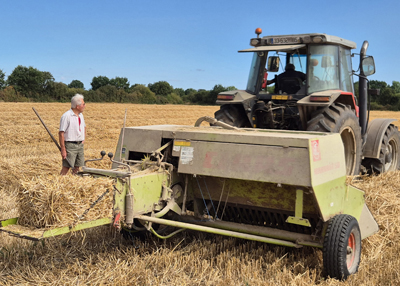
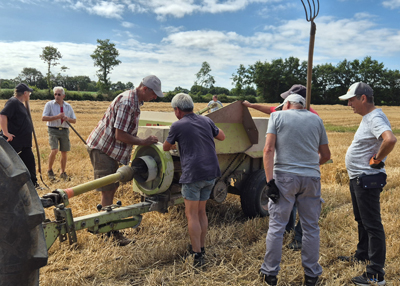
A round of applause for the star of the day: Didier's baler — he owns her, and lends us both his machine and his muscle every year. Born in 1975, she has quite a personality — let's just say breakdowns are part of her charm and she likes to keep us guessing. But Didier has been taming her for years: he knows every one of her whims, every bolt, every mood. The result on the big day: she only acted up twice! For a 51-year-old lady working in a heatwave, that counts as a stellar performance — and a flawless run for her dedicated handler. Between two tantrums, she purred along, swallowed the straw and spat out perfectly square bales — a true joy of old-school mechanics.
Muscles, pitchforks and a trailer
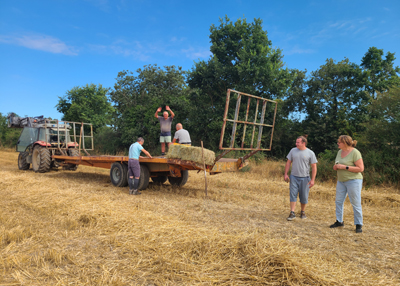
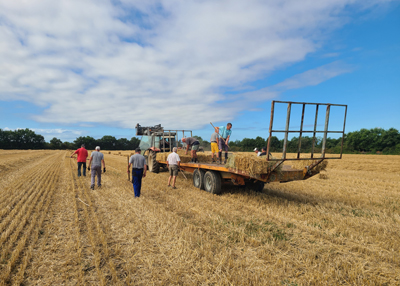
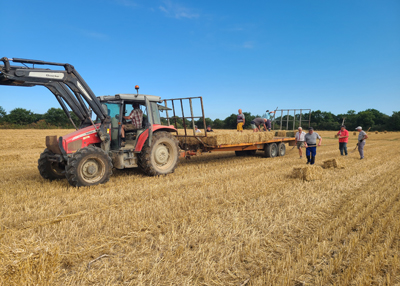
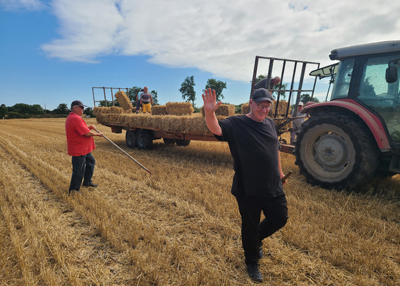
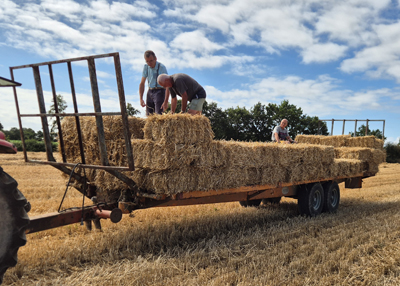
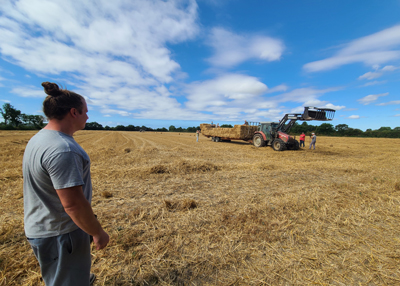
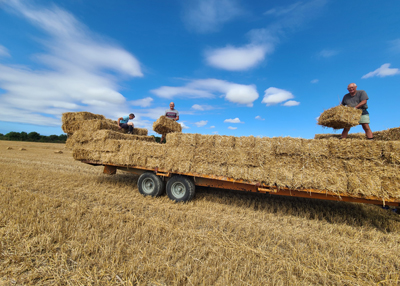
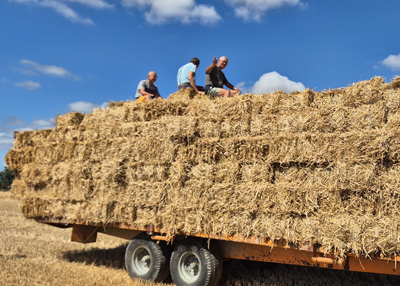
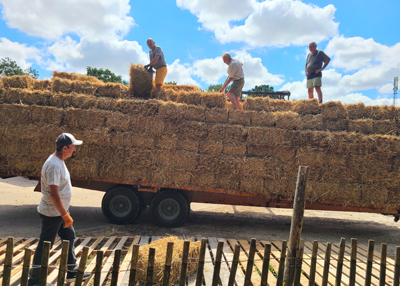
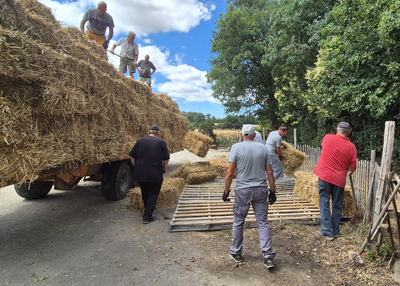
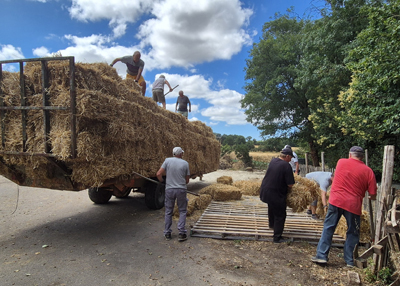
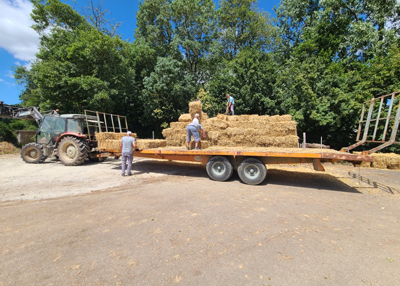
Then came the sporting event: loading the trailer using nothing but our pitchforks and our arms. No robots, no artificial intelligence — just collective intelligence and a few sore muscles to come. Bales flew, piled up, and the straw pyramid rose towards the blue Vendée sky.
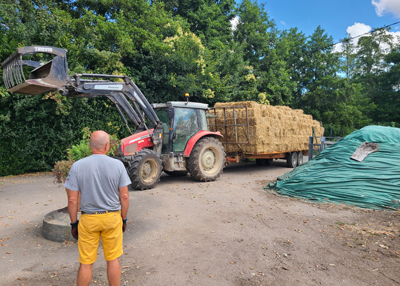
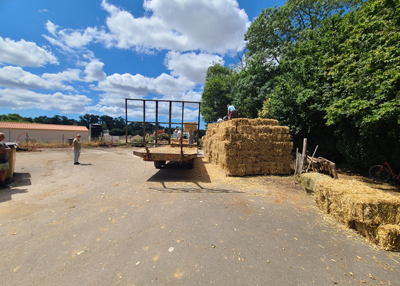
Next stop: the platform, to unload the whole lot. And hats off here: a team of valiant handymen, led by the brilliant Jean-Luc, had prepared a storage area on wooden pallets beforehand. Top-level logistics — our bales will spend the winter dry and well off the ground.
The transport parade
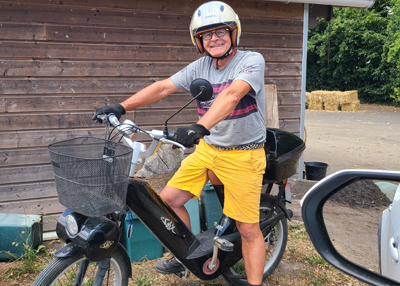
A special mention for the arrival procession, worthy of a rural elegance contest: Jacques came by bicycle, Didier caused a sensation on his Solex (vintage helmet included, see photo — pure class), others arrived by tractor or, more conventionally, by car. Not all CO₂ emissions were created equal, but all the goodwill certainly was!
And to finish… lunch!
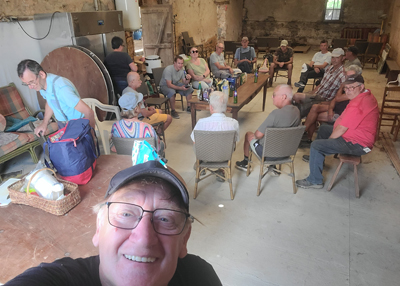
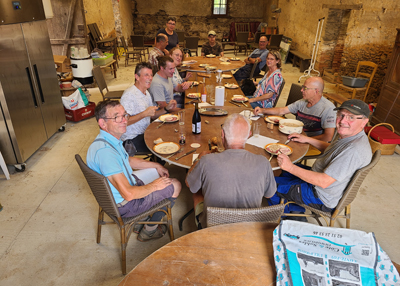
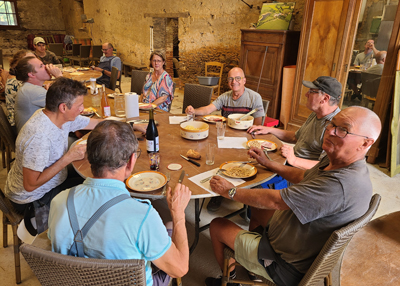
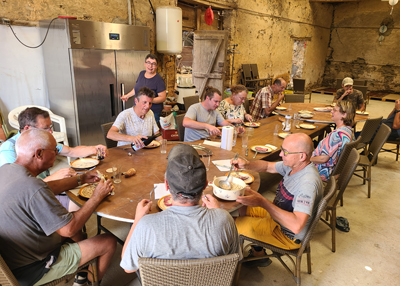
Naturally, it all ended the way it should: with a friendly meal organised by Catherine. Because at Compostons Ensemble, we know it well: straw feeds the compost, but it's conviviality that feeds the association.
A big thank-you to Laurent and Catherine for the field and the welcome, to Jean-Luc and his team for the platform, and to all the bale carriers, cyclists, Solex riders and tractor drivers. See you next year — the straw waits for no one!
But wait… what is all this straw actually for?
Good question! Now that the bales are waiting patiently on their pallets, here's a little reminder for gardeners, composters, and anyone who thought straw was only good for hats and scarecrows.
1. Mulching: a duvet for your vegetables
Spread a good layer of straw (8 to 10 cm) at the foot of your tomatoes, courgettes and other thirsty ladies, and watch the magic happen:
- Water stays put. Under the straw, the soil keeps its moisture. With the summers we're being served these days, that's every other watering saved — and your back will thank you.
- Weeds throw in the towel. Deprived of light, they give up before the match even starts. Less hoeing, more napping.
- The soil stays alive. Earthworms, insects and micro-organisms settle in under this thatched roof as if it were a four-star guesthouse. And living soil means a thriving vegetable patch.
2. In the composter: straw is "brown" gold
You know it (or you're about to): good compost is a balance between green materials (peelings, grass clippings, moist scraps) and brown materials (dry and rich in carbon). And straw is a champion of the brown category!
A handful of straw on top of your kitchen waste, and presto:
- No more smells — straw aerates and absorbs excess moisture.
- No more compacted heap that looks like soup. Structure returns, air circulates, bacteria breathe.
- Fruit flies sulk. A layer of straw on top, and the open-air buffet closes its doors.
That's exactly why our bales are waiting nice and dry on the platform: they're available to members to feed the composters all year round.
3. Strawberries live up to their name
Quick culture break: the English word strawberry literally means "straw berry" — and it's no coincidence! A bed of straw under your strawberry plants keeps the fruit clean, dry, and out of reach of slimy slugs. Your strawberries will thank you in June.
4. And also…
- Clean paths between the rows of your vegetable garden: no more muddy shoes.
- Winter protection for tender plants (artichokes, dahlias… tuck them in like grandma used to tuck you in).
- A shelter for hedgehogs in a quiet corner of the garden — they'll rid you of slugs in exchange for the rent.
To sum up
Straw is the ultimate zero-waste champion: it protects, it feeds, it saves water, and it ends its life as compost. The loop is closed — and at Compostons Ensemble, we love a closed loop.
Bales are available at the ridiculously low price of €2.50 each — cheaper than a coffee on a café terrace, and considerably more useful for your tomatoes. Enough to cover the costs, with the rest going straight into the association's kitty.
So help yourselves (within reason — leave some for your friends) and happy mulching!