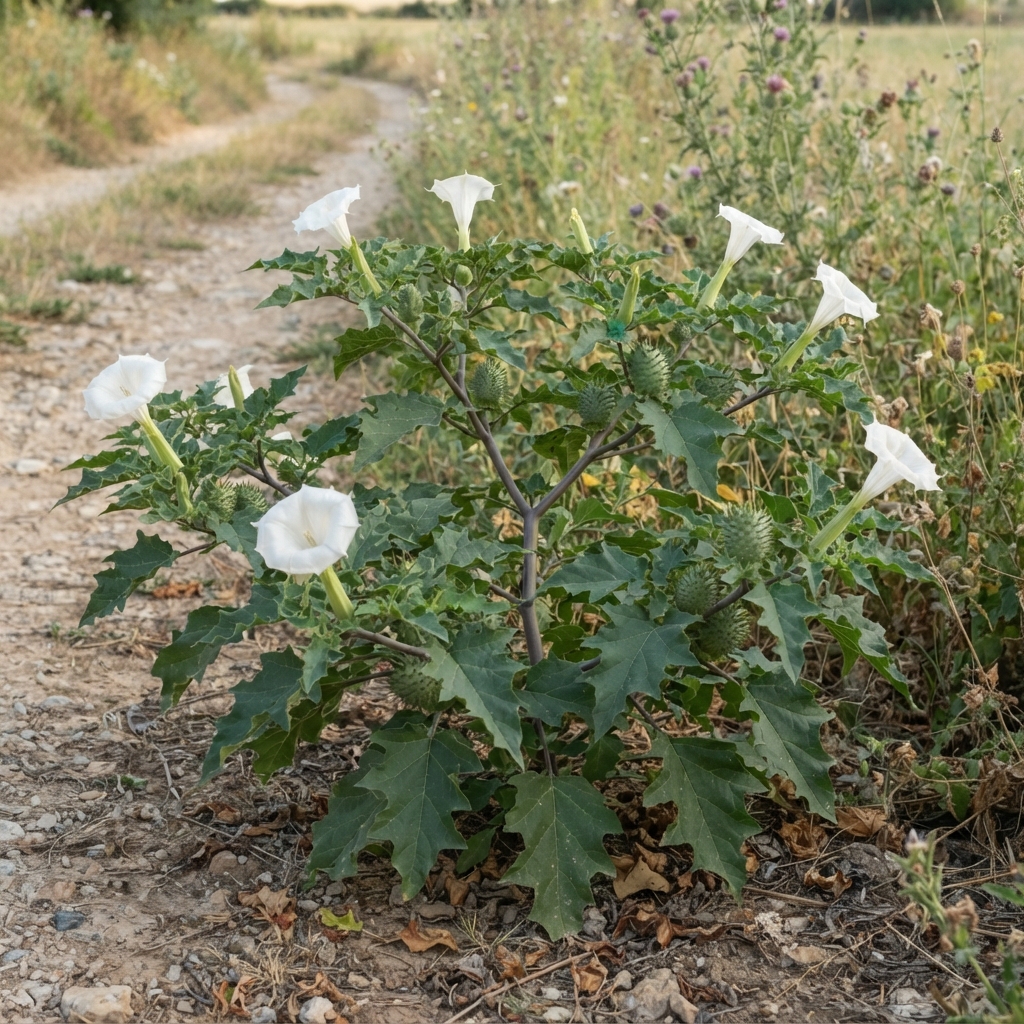
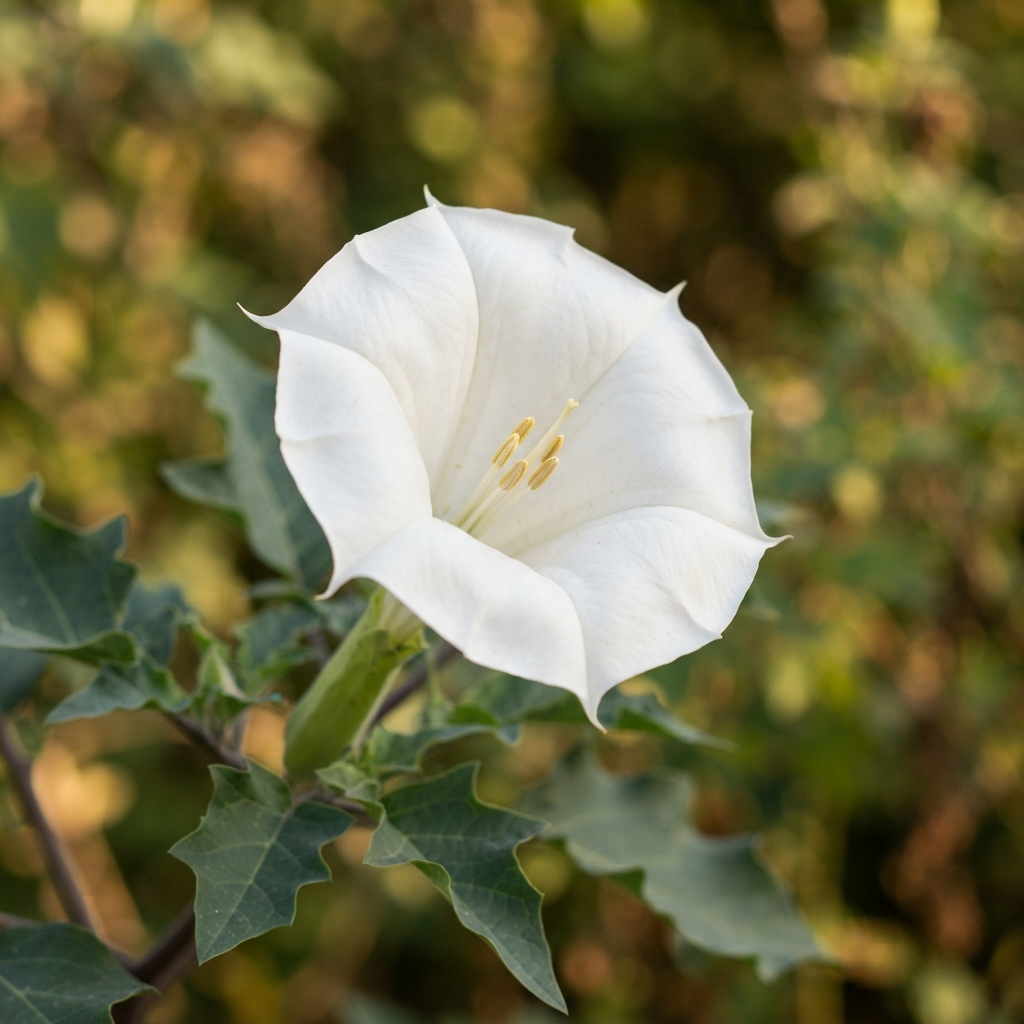
Large white trumpet-shaped flowers, a sweet scent at dusk… and one of the most poisonous plants in our countryside. Meet datura, a "lady of the night" that loves neglected ground.
Why are we talking about it now?
You may not have noticed yet, but the Grosbreuil composting site is expanding! It is taking over part of the neighbouring wastewater treatment plant. Great news for the association… with one small catch: the new plot is covered with freshly disturbed, bare soil, exactly the kind of ground where datura loves to settle.
So before we put our gloves on, let's get to know the enemy.
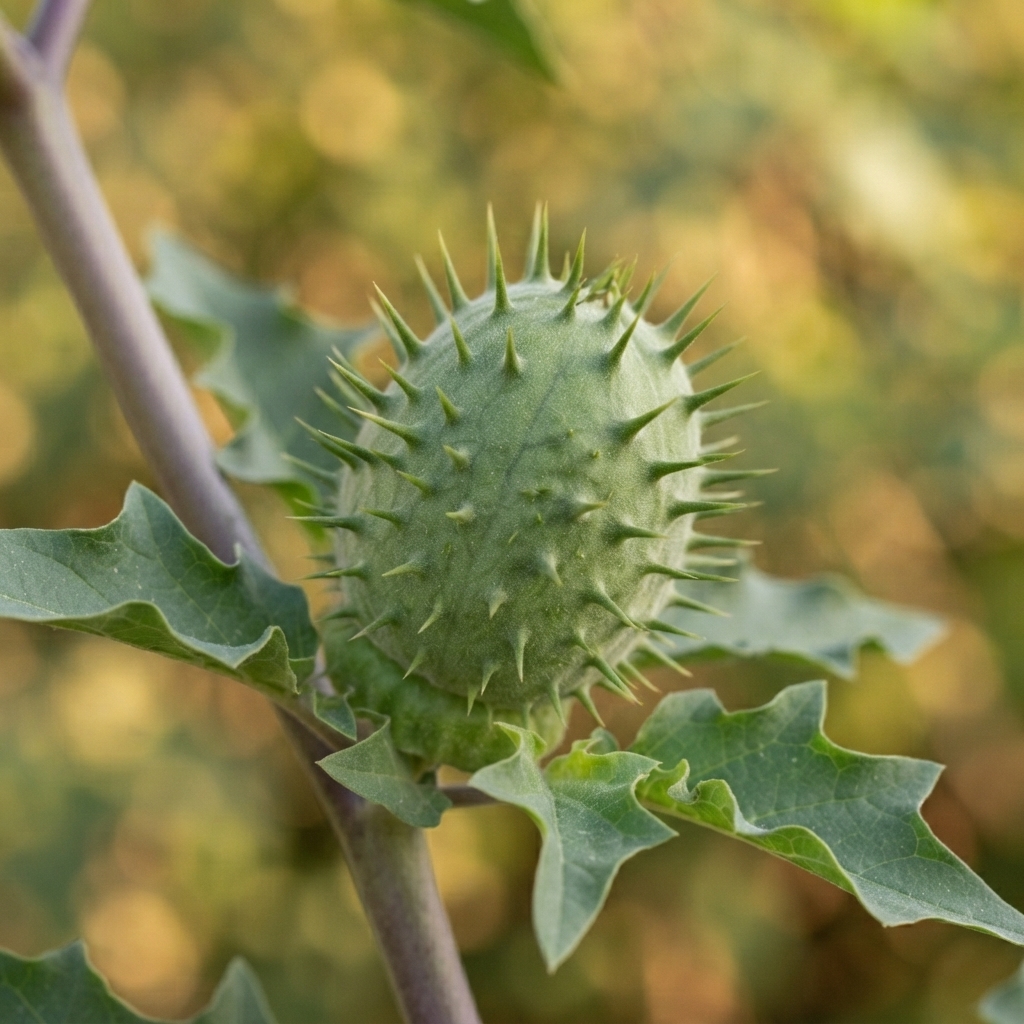
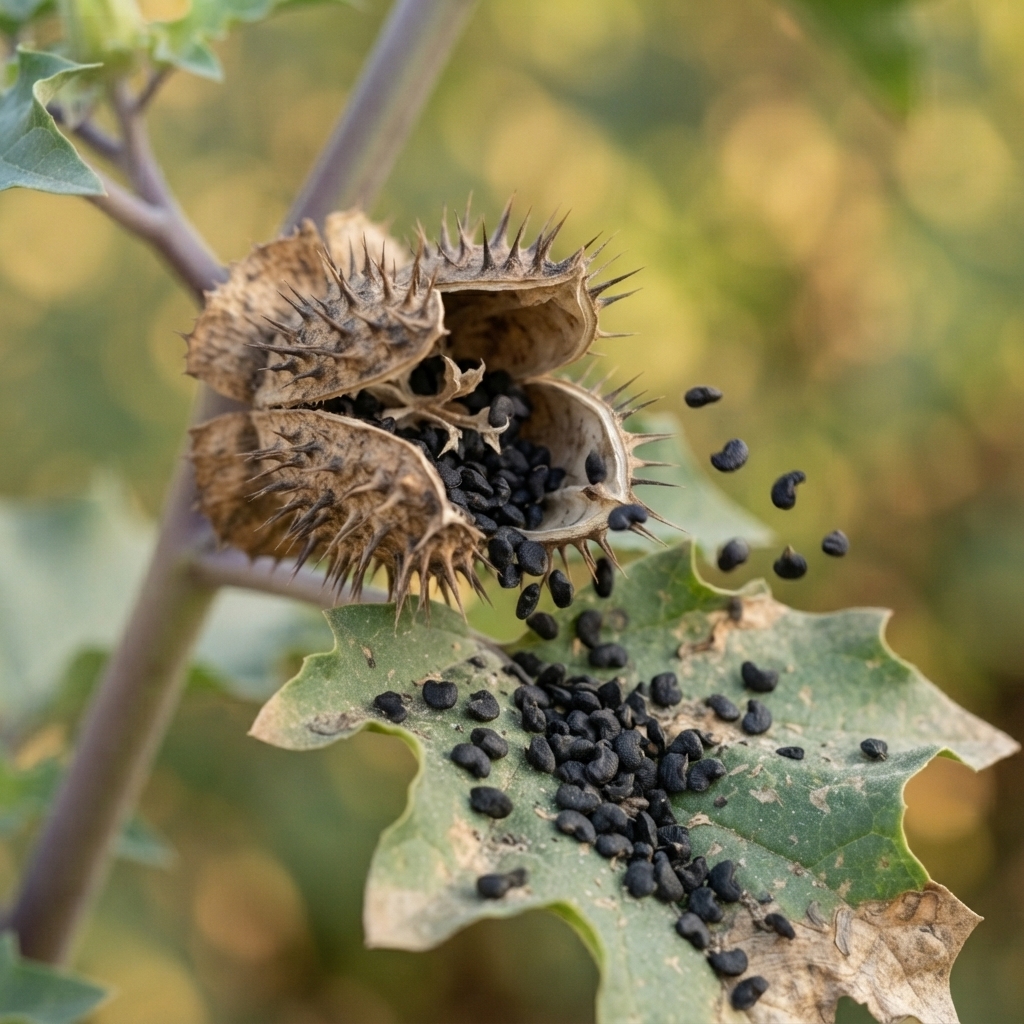
Hover over the prism to pause it.
A traveller from afar
The datura we find around here is Datura stramonium, known in English as thorn apple, jimsonweed or, more ominously, devil's trumpet. It belongs to the nightshade family (Solanaceae), like tomatoes, potatoes… and deadly nightshade. A family that holds the very best and the very worst!
Botanists long argued about where it came from, but most now agree on Central America, around Mexico. Native American peoples knew it well and used it with extreme caution, in rituals reserved for shamans.
The plant crossed the Atlantic in the 16th century, in the wake of the great voyages of exploration. In Europe it was first grown as a curiosity in botanical gardens and in apothecaries' herb gardens. Its sinister reputation followed it: it was linked to witches, potions and the "flying ointments" said to send them off on their broomsticks. Then, quietly, it escaped from the gardens and made itself at home along paths, on rubble and in cultivated fields, in France as elsewhere.
For a long time, medicine actually used it: until the late 20th century, French pharmacies still sold "anti-asthma cigarettes" made from thorn apple leaves! They have since been withdrawn, and rightly so.
A little anecdote: the American name jimsonweed is a corruption of "Jamestown weed". In 1676, soldiers sent to Jamestown, Virginia, are said to have eaten the young shoots as a salad… and to have spent several days in such a spectacular state of delirium that the story went down in history.
How does it grow?
- Type: annual plant (it dies with the first frosts, but its seeds stay behind).
- Height: from 30 cm to over 1.5 m, heavily branched, with a hollow stem often tinged with purple.
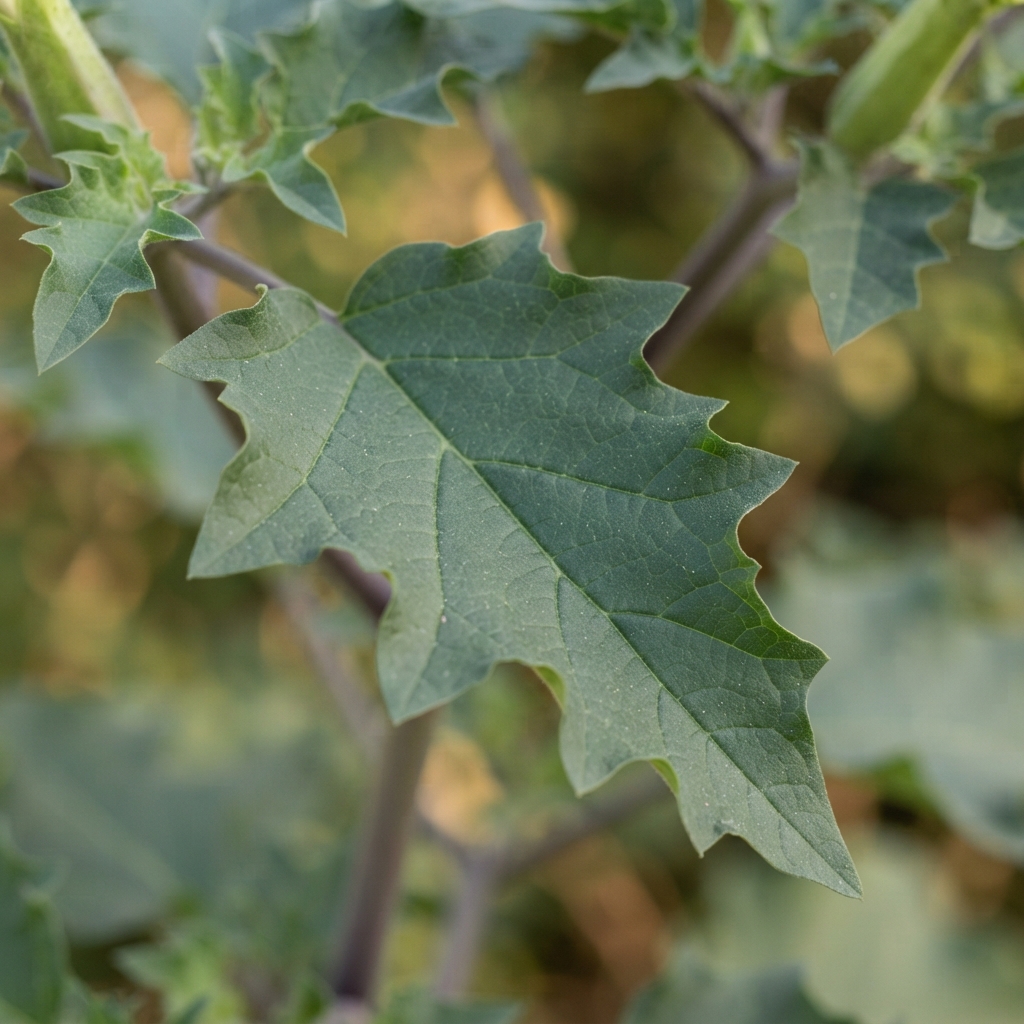
- Leaves: large, with irregular teeth, giving off an unpleasant smell when crushed.
- Flowers: white (sometimes mauve), long funnels 6 to 10 cm long, opening mostly in the evening. Flowers from July until the frosts.
- Fruit: a capsule covered in spines, about the size of a walnut, splitting into four when ripe.
- Seeds: small, black, kidney-shaped, several hundred per capsule.
Datura is an opportunist. It loves disturbed, rich, sunny soil: vegetable gardens, field edges, waste ground, heaps of earth… and plots that are no longer looked after. It germinates late, once the soil has warmed up (from May to July), which lets it escape spring weeding.
Its real strength lies in its seeds. A single vigorous plant can produce several thousand, and they can stay alive in the soil for decades, waiting patiently for a spade to bring them back to the light. In other words: one plant left to go to seed this year means an infestation for the next ten or twenty years.
Why is it so dangerous?
Every part of datura (roots, stems, leaves, flowers and above all the seeds) contains tropane alkaloids: atropine, hyoscyamine and scopolamine. These substances disrupt the nervous system, and the amount in a plant varies enormously from one specimen to another, which makes any ingestion unpredictable.
- very dry mouth, intense thirst;
- dilated pupils, blurred vision, sensitivity to light;
- flushed face, hot and dry skin, fever;
- racing heart;
- agitation, confusion, hallucinations, sometimes seizures.
Doctors sum up these symptoms with a famous saying: "dry as a bone, red as a beet, blind as a bat, mad as a hatter".
If in doubt, immediately call a poison control centre or the emergency services (15 or 112 in France), even if the person seems fine.
Those most at risk are children, drawn to the pretty flowers and "hedgehog" fruits, and also animals: dogs, horses, cattle, poultry. And the danger doesn't stop at the garden gate: datura seeds can get mixed into harvests of maize, buckwheat, soya or beans. In France, several batches of buckwheat flour and canned vegetables have already been recalled for this reason.
Finally, some people try to use it "recreationally". That is a very bad idea: poisonings are common, often serious, and the delirium it causes is described as terrifying.
And what about compost?
This is a key point for our association: datura does not go in the compost, unless it is pulled up young, well before the fruits form. In a garden compost bin, the temperature does not stay high for long enough to destroy the seeds. The result: you spread the plant all over your vegetable patch with your compost!
Plants in flower or in fruit should go into a closed bag, with household waste or to the recycling centre, making clear that they are poisonous plants.
The right moves… and a call for volunteers!
- wear gloves and long sleeves;
- pull it up before the fruits form, ideally in June or July, while the plant is young;
- pull the whole plant out with its root; it's easier when the soil is damp;
- don't touch your eyes or mouth while working, and wash your hands thoroughly afterwards;
- bag the plants straight away, especially those already bearing capsules;
- go back several times during the season: seedlings come up in waves.
The new plot taken over from the wastewater treatment plant is a blank page: bare soil, plenty of sun, no competition… If nobody looks after it, datura won't ask our permission before moving in. And every plant we miss means years of extra work, right next to our swaths.
The good news is that we are starting from scratch. Regular checks from next spring, a few rounds of pulling before the fruits form, and the plot will stay clean. With several of us, it goes very quickly.
So when the call goes out for the next clean-up morning, get your gloves out! A coffee, a bit of good humour, and we'll soon have our plot back doing what it's meant to do: producing lovely soil, not devil's trumpets.
The Compostons Ensemble team