After the hottest summer ever recorded, our greenhouse and vegetable garden need a new instruction manual. Our grandparents' calendar no longer works: rain now falls mostly in winter, spring is dry and heatwaves arrive in June. Everything suggests the coming years will look like this one: it is highly likely that we will have to adapt… and we must start now. Here is a calendar to help us prepare, from October to September, in the garden and in the greenhouse. Feel free to use it in your own garden!
☀️ What the last 12 months taught us
- Winter is the water season. February 2026 was very wet and very mild, while autumn 2025 had stayed dry.
- Spring has become dry. Almost 40% less rain than usual in La Roche-sur-Yon between March and May.
- The "Ice Saints" are no longer a threat. Since 2005, these mid-May days (11–13 May) have only brought real frost once, in 2010. Here, the last frost now tends to come in March or early April.
- Summer starts in June. June 2026 was the hottest ever recorded in France, and the whole of Vendée was placed on water alert at the end of June.
🌱 Our 6 rules for gardening differently
1. Bring summer forward
Tomatoes, courgettes and beans go in at the end of April under fleece, so they are well rooted before the heatwaves.
2. Take a break in July–August
Harvest, provide shade, plant almost nothing. The second season starts again in the greenhouse at the end of August.
3. Never leave soil bare
Compost in autumn, green manures in winter, 10–15 cm of mulch from April.
4. Store winter water
1 m² of roof × 1 mm of rain = 1 litre. Tanks must be filled between December and March.
5. Water little, deep, at dawn
Drip irrigation or ollas under the mulch, between 5 and 8 am. In the greenhouse, avoid evening watering: the moisture stays trapped on the leaves all night, which is exactly what blight needs to develop. Watered at dawn, everything dries out during the morning.
6. Choose tough varieties
Small-fruited tomatoes, climbing beans, trailing squash, chillies, sweet potatoes, chard…
🗓️ The greenhouse and garden calendar, month by month
| Month | Soil | Greenhouse | Garden |
|---|---|---|---|
| October | 3–5 cm of compost, loosen with a broadfork without turning | Lamb's lettuce, winter lettuce, spinach, radishes | Green manures, garlic, shallots, white onions; broad beans late October |
| November | Cover all bare soil: dead leaves, straw, manure | Lettuce, rocket, salad mix; ventilate on mild days | Strawberries, soft fruit, trees; round peas |
| December | Rest; install gutters and water tanks | Frost fleece on freezing nights | Harvest leeks, cabbages, lamb's lettuce |
| January | Order heat-tolerant seeds | Sow chillies and peppers indoors in the warm | Protect cabbages in hard frost |
| February | Uncover spring beds, cut green manures | Sow tomatoes and aubergines in the warm; lettuce, radishes, peas | Early potatoes under fleece; broad beans, peas |
| March | Prepare summer beds with compost | Prick out tomatoes and chillies; sow courgettes, squash, cucumbers in pots | Onions, shallots, potatoes; carrots, beetroot, radishes, lettuce |
| April | Mulch thickly and lay drip lines | Plant tomatoes, peppers, aubergines (early April) | Late April: tomatoes, courgettes, squash, beans under fleece |
| May | Top up the mulch | Put up shade netting (30–50%), open fully | Second sowing of beans, sweet potatoes, leeks in a nursery bed |
| June | Water only at the base of plants | Permanent shade, watering at dawn | Harvest broad beans, peas, early potatoes, garlic; transplant leeks |
| July | Do not dig; keep the soil covered | Harvests; cover freed-up space | Harvests; winter carrots and beetroot in the shade |
| August | Prepare the second season: compost + mulch | Late August: sow cabbages, lettuce, chard, fennel | Turnips, winter radishes, spinach after a storm |
| September | Compost on freed-up beds | Plant out August sowings; lamb's lettuce | Cabbages, leeks, lettuce as soon as the rain returns |
Good to know: the greenhouse is 5–10 °C warmer than the garden. In spring, everything happens there 3–4 weeks earlier.
🍅 When to plant what? The new dates
The old rule "plant after the Ice Saints" becomes: end of April, under fleece, ready to be covered if a cold night is forecast.
| Vegetable | Planting out | Before | Climate tip |
|---|---|---|---|
| Tomato | 20–30 April (greenhouse: early April) | after 15 May | Small-fruited varieties; beefsteaks in a shaded greenhouse |
| Courgette | 20–30 April | mid-May | Two plants are enough; very thick mulch |
| Squash, pumpkin | late April–early May | late May | Trailing varieties shade the soil |
| Bean | 20 April–15 May, then late July | May–June | Climbing and borlotti types cope better |
| Chilli, pepper | early May | late May | They love heat: tomorrow's allies |
| Potato | late February–March | April | Harvested before the hot spells |
| Broad beans, peas | late October–November | March | Sown in autumn, harvested before the drought |
| Garlic, shallot | October–November | February–March | Autumn planting is much safer |
| Winter cabbages | sow late August, plant late September | sow in June | June sowings no longer survive the heat |
The real signal for summer vegetables: soil above 12 °C in the morning. A soil thermometer costs just a few euros!
💧 Our water plan: how many tanks do we need?
Our greenhouse is about 15 m² and we have two 1,000-litre tanks. With mulch and drip irrigation, we estimate the June–August need at about 1,200 litres for the greenhouse and 3,900 litres for the garden, around 5,100 litres in total. The greenhouse roof can collect about 3,600 litres over the winter.
| Extra tanks | Total storage | Summer need covered | What it takes |
|---|---|---|---|
| None (today) | 2,000 L | 39% | Greenhouse covered, garden barely |
| +1 | 3,000 L | 59% | The greenhouse roof is enough |
| +2 | 4,000 L | 78% | Greenhouse roof + spring rain |
| +3 | 5,000 L | 98% | A second roof of at least 6 m² (shed, cabin) |
Our goal: add one or two tanks this winter, linked in series, covered against mosquitoes, and kept first for the greenhouse and tomatoes. The rest of the garden will rely on thick mulch and early planting.
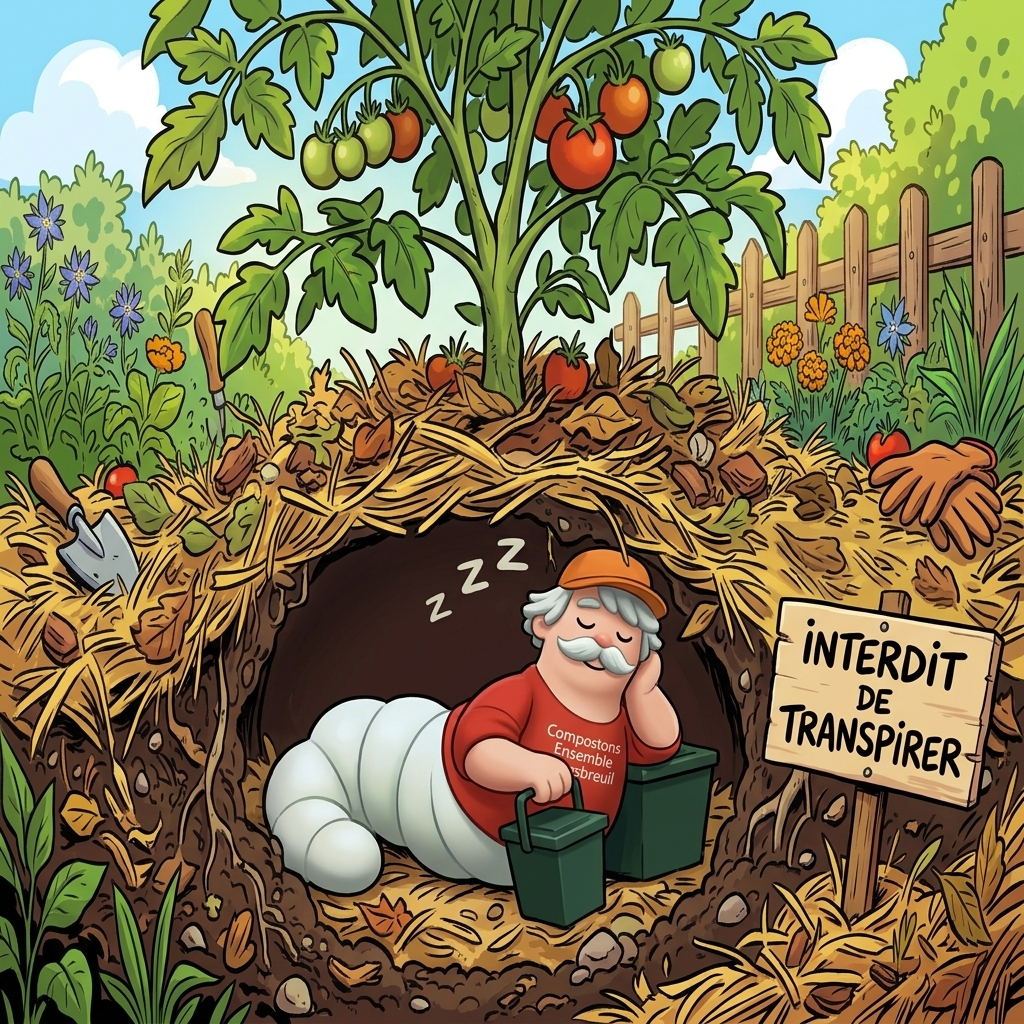
"I never drink in the middle of the afternoon: I go down into the cool under the straw and wait for dawn. Do the same with your tomatoes!" — Hector, gardening earthworm and water-saving expert
🤝 Can you lend a hand?
Do you have an IBC tank (1,000 L) gathering dust in a barn, a spare length of gutter, or a few hours to help us install them this winter? Come and see us at the composting site, Wednesdays and Saturdays, 10 am to noon, or get in touch.
Further reading (in French): This autumn, turn your soil into a sponge! · Heatwave guide: garden and greenhouses · Manure · Compost · Wood chips · Straw guide
Current water restrictions: VigiEau · Vendée Prefecture
Weather sources: Météo-France Pays de la Loire monthly climate bulletins (November 2025 to May 2026), Météo-France summer 2026 review, Vendée prefectoral order of 29 June 2026.
The Compostons Ensemble team 🌱